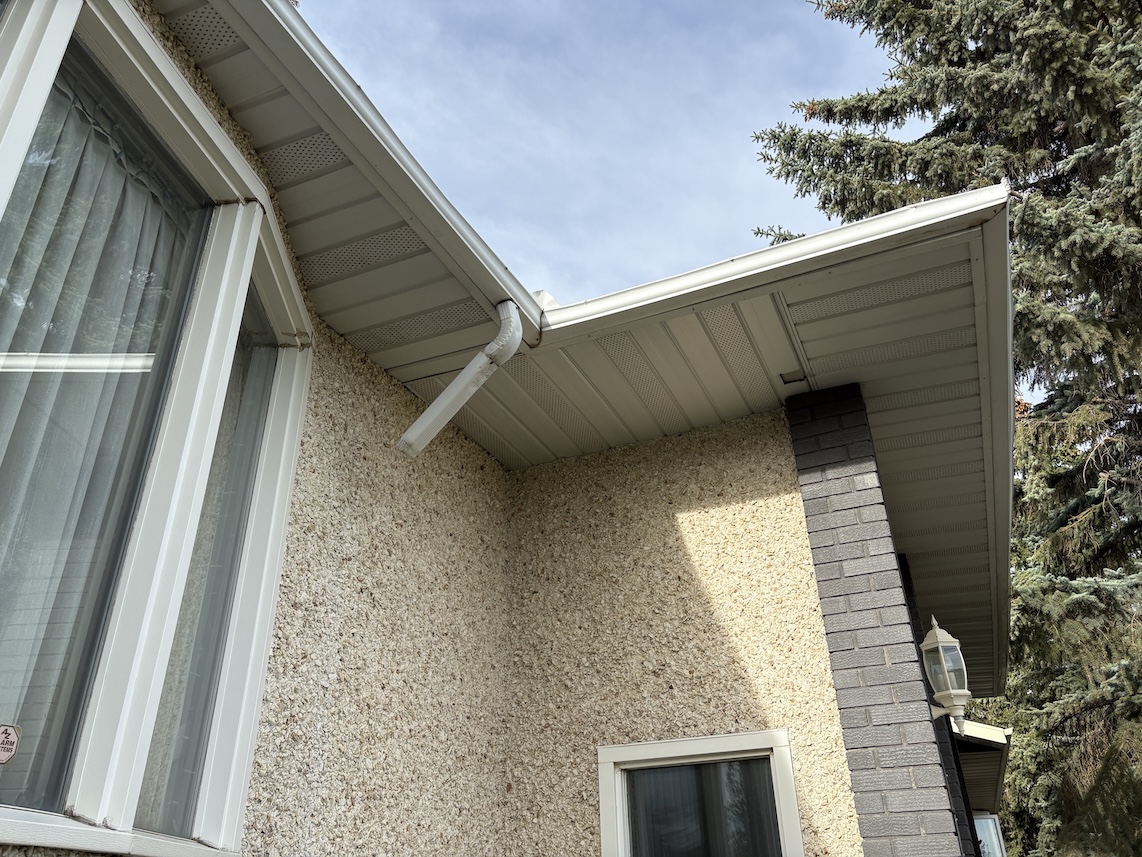
Most gutter problems can be repaired. Leaks, loose sections, sagging areas, separated joints, and damaged downspouts are often fixable without replacing the entire system. Replacement usually becomes the better option when the gutters are heavily rusted, pulling away from the house in multiple locations, improperly sized, or reaching the end of their useful life.
The challenge for homeowners is figuring out which category they fall into. A lot of people assume they need new gutters when they don't, while others keep paying for repairs on a system that should have been replaced years ago.
It's One of the Most Common Questions We Get
Someone notices water spilling over the edge of a gutter during a rainstorm, or they spot a section that looks like it's pulling away from the house. The first thing they usually ask is whether they need new gutters.
The honest answer is that it depends on what's actually causing the problem.
I've been on plenty of homes where the owner thought they were facing a major replacement project, only to find out the issue was a blocked downspout and a couple of loose hangers. I've also seen the opposite. A homeowner keeps patching leaks every year because the gutters are technically still hanging on, but the entire system is worn out and costing more in repairs than it's worth.
The goal isn't to sell a replacement or a repair. The goal is figuring out which option actually makes sense for the house.
When a Repair Usually Makes Sense
Most gutter systems don't fail all at once. They develop small problems over time.
A leak at a corner joint doesn't mean the entire system is bad. Neither does a loose section after a heavy winter or a downspout that's been damaged by snow or ice.
If the majority of the gutters are still solid, properly attached, and draining well, repairs are often the most practical solution.
Common repairable issues include leaking seams, loose fasteners, minor sagging, damaged downspouts, small sections that have been bent by ladders, and areas where water is escaping because the slope has shifted slightly over time.
In many cases, these repairs can add years to the life of the existing system.
When Replacement Starts Making More Sense
Sometimes a gutter system is simply telling you it's done.
One sign is when problems start showing up everywhere instead of in one isolated area. You fix one leak and another appears six months later. One section gets reattached, but another starts pulling away. Water keeps finding new places to escape.
That's usually a sign that the system has reached the point where repairs are becoming temporary solutions rather than long-term fixes.
Rust is another major indicator. Surface rust can often be managed, but once corrosion starts eating through the metal, the structural integrity of the gutter begins to disappear. At that point, repairs become difficult because you're trying to attach or seal materials that are already deteriorating.
I've also seen older homes where the gutters were simply undersized from the beginning. They may have worked decades ago, but roof designs, drainage requirements, and weather patterns have changed. During heavy rainfall or rapid spring melts, the system just can't keep up anymore.
The Edmonton Factor
Living in Edmonton puts a unique amount of stress on gutter systems.
Every winter, gutters carry the weight of snow and ice. Then spring arrives and thousands of litres of meltwater move through the system over a relatively short period of time. Summer storms can dump a surprising amount of water on a roof in just a few minutes.
That cycle repeats year after year.
Eventually fasteners loosen, slopes change slightly, and weak areas start showing themselves. That's why it's not uncommon to see a gutter system look perfectly fine from the ground while having several developing issues once it's inspected up close.
A Homeowner Who Almost Replaced Everything
Not long ago, we looked at a home where the owner was preparing for a complete replacement because water was pouring over multiple sections during every rainfall.
From the ground, it certainly looked like the gutters were failing.
Once we got up there, though, the situation was completely different. The gutters themselves were still in good condition. The real problem was years of debris buildup combined with two severely restricted downspouts. Water couldn't leave the system fast enough, so it backed up and overflowed.
After a thorough cleaning and a few minor adjustments, the gutters performed exactly the way they were supposed to.
That homeowner went from expecting a several-thousand-dollar replacement project to paying for maintenance and a few small repairs.
What About Seamless Gutters?
If your home has an older sectional gutter system and you're starting to experience recurring leaks at joints and connections, upgrading to seamless gutters can sometimes make sense.
Seamless systems eliminate many of the connection points where leaks tend to develop over time. Fewer seams generally mean fewer maintenance issues and a cleaner appearance.
That doesn't mean every home with sectional gutters needs an upgrade, but it's often worth discussing if repairs are becoming frequent.
So How Do You Know Which Option Is Right?
The easiest way to think about it is this: if you're dealing with one or two specific problems, repairs are often the answer. If you're dealing with problems everywhere, replacement starts becoming more attractive.
A good contractor should be able to explain why they're recommending one option over the other. If the only solution being offered is replacement without a clear explanation of what's actually wrong, it's worth asking more questions.
Sometimes a repair is the right call. Sometimes replacement is the smarter investment. The important thing is understanding the condition of the system before spending money on either option.
Final Thought
Gutters don't care whether you're planning to repair them or replace them. They only care whether water is moving where it's supposed to go.
If your system is keeping water away from your foundation, protecting your fascia, and draining properly during rain and snowmelt, it's doing its job. If it isn't, the next step is figuring out why.
Sometimes that's a simple repair. Sometimes it's time for a new system. The trick is knowing the difference before you open your wallet.
Not sure what your gutters need?
Book a free inspection and we'll tell you straight, no upsell.
Get a Free Inspection